Breastfeeding is every baby 's natural right
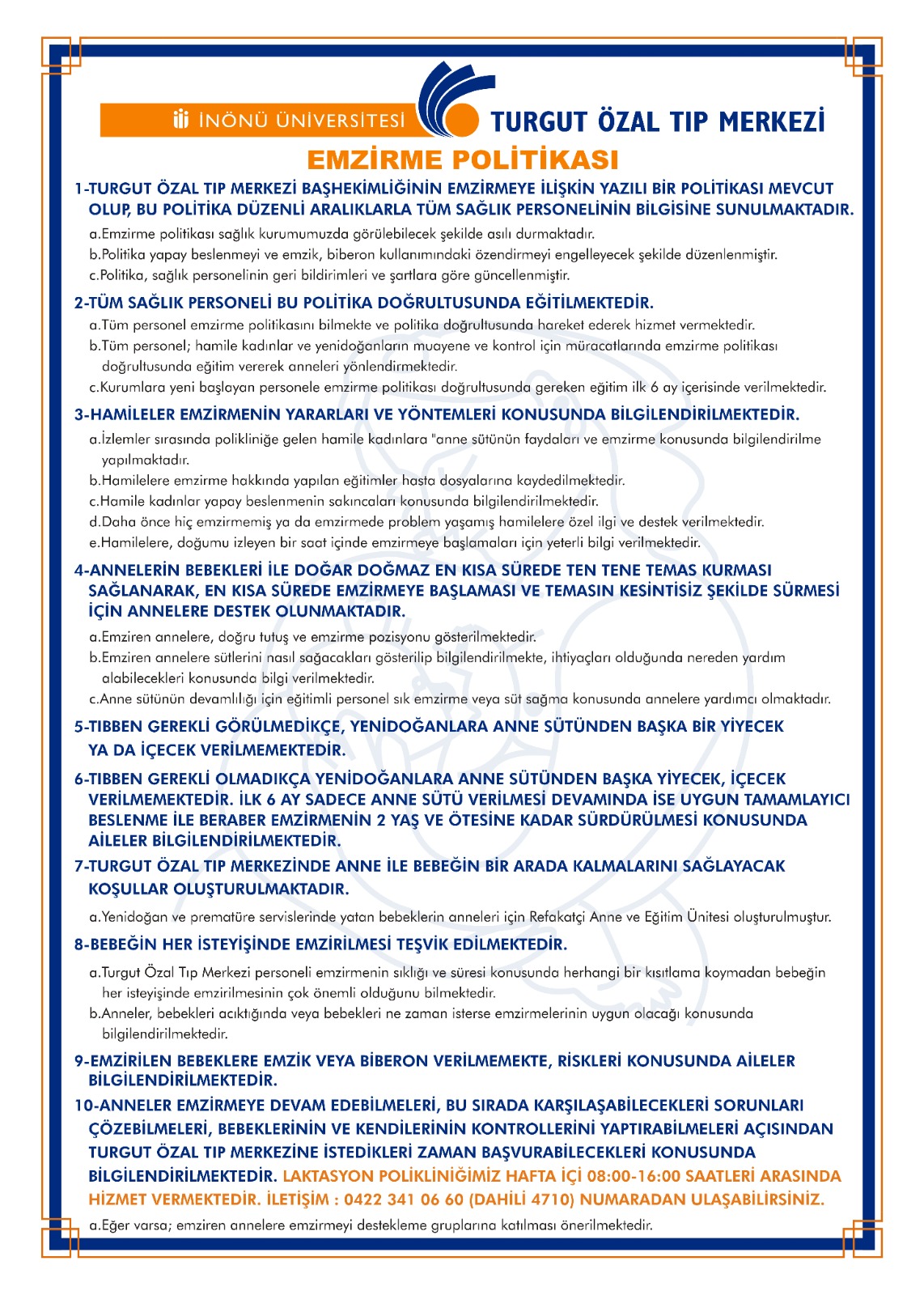
Turgut Ozal Medical Center received the title of Baby Friend Hospital in 2019.
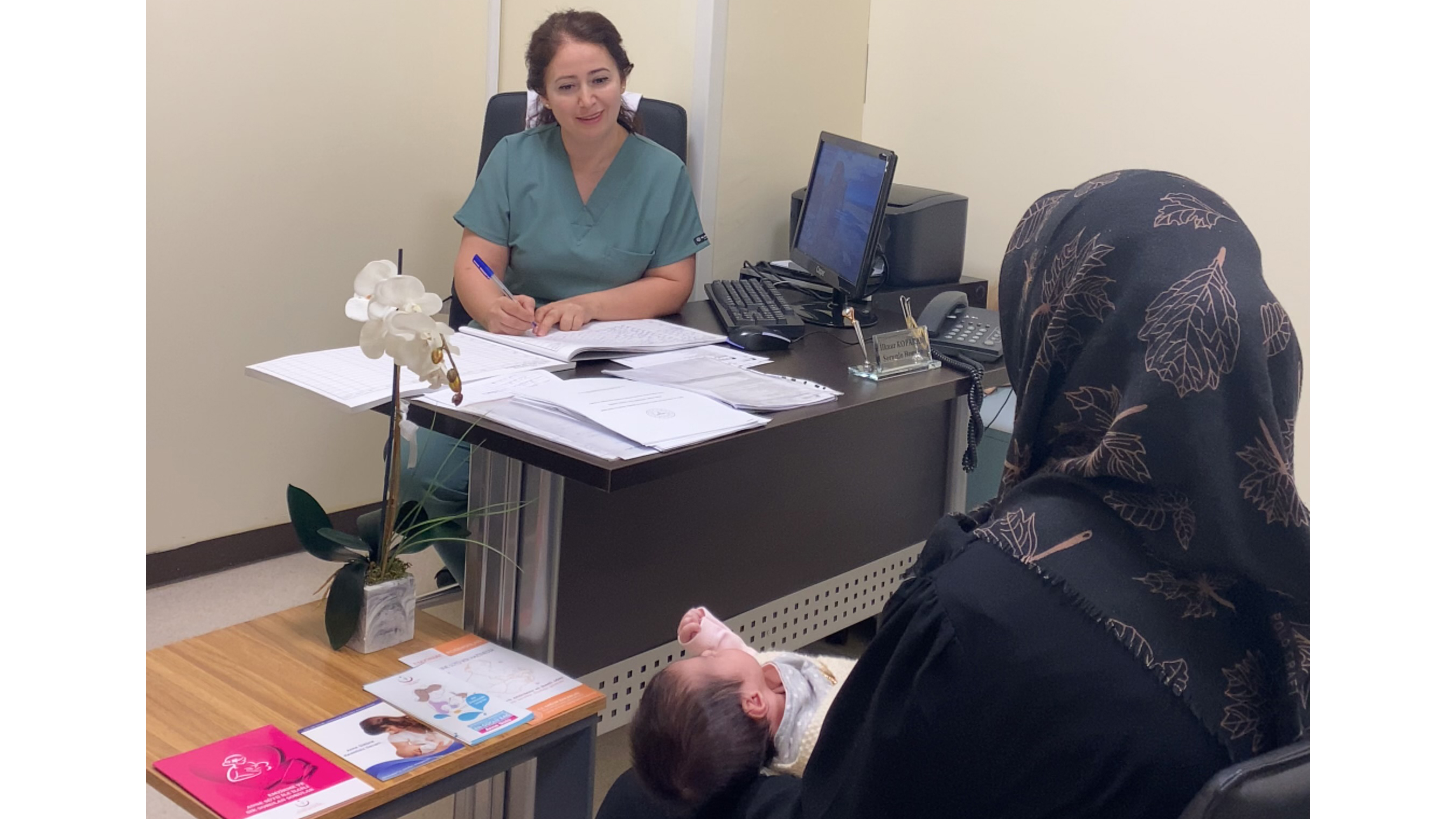
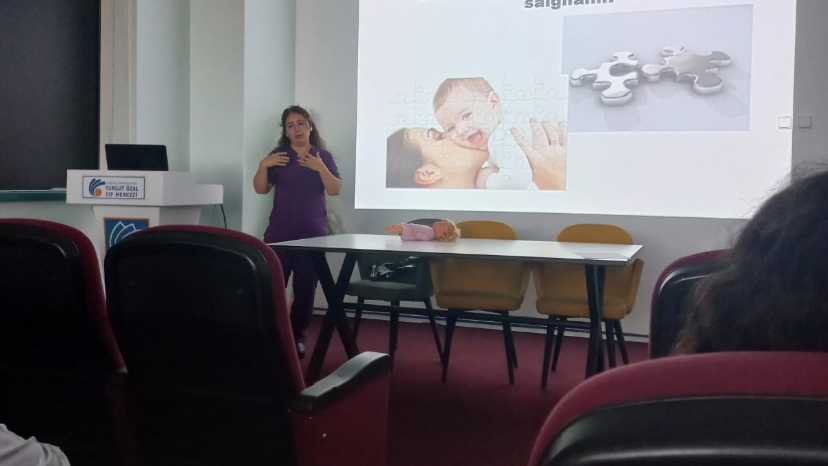
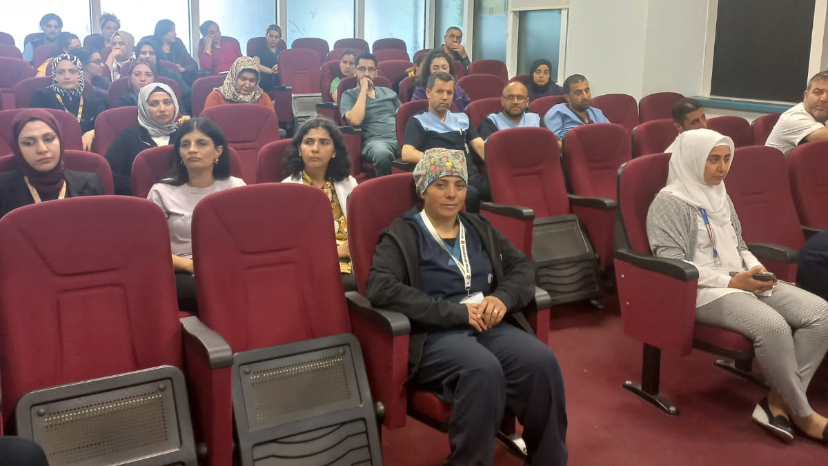
Many activities are underway to emphasize the importance of breast milk and breastfeeding. The purpose of these activities is to provide your baby with nutritious breast milk early, adequately and sustainably for the first six months of life, providing all of your baby's needs, including water, and making the most important contribution to the development of the immune system. The importance of breastfeeding and breastfeeding, correct breastfeeding position and techniques, ensuring maternal and infant skin contact, breastfeeding is not clear. information to mothers with full breasts, clogged breasts, mastitis and abscesses, methods and techniques of breastfeeding when the mother and baby are separated, information on the harms of breastfeeding and bottle use, training on when and how to give non-breastfeeding forms. A postpartum nurse provides the necessary support for the mother and the baby. In any case, breastfeeding and breastfeedingLaktasyon PolikliniğiSupport continues to be provided through .
Lactation Polyclinic ((Breastfeeding Education and Counseling Services))
Laktasyon Polilkiniğimizde For mothers who want to breastfeed again, education is also provided in the case of adoption and in the case of refusal of breastfeeding. It also helps our mothers in situations such as inadequate milk production, such as psychological or physical illnesses that occur in the mother. In our polyclinic, which serves to ensure that breastfeeding continues and is maintained in a healthy manner, mothers with breastfeeding problems receive face-to-face interviews and training on solutions to identified problems. She'll be invited back to the polyclinic for later, and we'll continue her training until she's successful in breastfeeding.
Lactation (training in breastfeeding)
It's next to the 1st floor maternity ward and the women's hospital.
0422 341 06 60 / 4710
Hemşire : İlknur ERCİŞLİ
INTERNATIONAL CODE OF MARKETING OF BREAST-MILK SUBSTITUTES
PURPOSE OF THE CODE ;protection and dissemination of breastfeeding, ensuring adequate information and marketing distribution of breast milk products, and contributing to the safe and adequate nutrition of babies by ensuring proper use of breast milk products.
YASANIN KAPSAMI ;
- The law covers the marketing and related activities of the following items:
- Breastmilk formula, including formula baby food,
- other dairy products, foods and beverages, including additives that may be bottled, marketed or otherwise advertised as being suitable for use in place of breast milk, either in whole or in part, or with additives,
- Biberpn and suckling
- All of this includes information about the quality and supply and use of these products.
International law on the marketing of breast milk
Article 1 Purpose of the Law Article 2 Scope of the Law Article 3 Definitions
Article 4 Knowledge and education
Madde 5- The public and mothers
Article 6 Health systems
Article 7 Health workers
Article 8 Manufacturers and distributors employed Article 9 Labelling
Article 10 - Quality
Article 11 - Application and monitoring
Article 1: The purpose of the Act is to contribute to the safe and adequate nutrition of infants by protecting and promoting breastfeeding and, where necessary, by providing adequate information and appropriate marketing and distribution of breast milk products.
Article 2: Maternal milk products, including formula infant formula; other milk products, foods and beverages, including additives that may be bottled, marketed or otherwise advertised as being suitable for use in place of breast milk in whole or in part; bottles and suckers.
Article 3: 'Mother's milk treatment' means any food marketed or otherwise marketed as a product which may or may not replace breast milk, whether or not suitable for this purpose.
"Formulated infant formula": formulae of breast milk that can be applied to their physiological characteristics to meet the normal nutritional needs of infants aged 4-6 months, formulated as a test according to the Food Code Commission Standards.
Article 4: Information and educational materials, whether written or visual, relating to the nutrition of infants and intended for the access of pregnant women and mothers of infants and young children, shall contain clear, understandable information on all of the following points:
- the benefits and advantages of breastfeeding;
- preparations for breastfeeding and continuing breastfeeding;
- adverse effects of partial bottle feeding on breastfeeding;
- the difficulty of reversing the decision not to breastfeed;
- the proper use of infant formula when necessary, whether ready or prepared at home.
Such material shall not contain any picture or text that idealizes breast milk attorneys. Donations by manufacturers or distributors of information or educational tools and materials shall be made only with the request and written approval of the relevant official authorities or within the framework of rules established by the State for this purpose.
Article 5: The products covered by this law shall not be advertised or otherwise promoted to the public. Manufacturers and distributors shall not, directly or indirectly, supply pregnant women, mothers or their relatives with samples of the products covered by this law. For these products, no method of promotion should be used, such as sales advertisements, promotions, special displays to increase sales on the counter in ways that directly affect the consumer, discount coupons, sales campaigns, sales to the detriment, free sales alongside another product. In the workplace, marketing personnel should not attempt to contact pregnant women, mothers of babies and young children.
Article 6: None of the possibilities of the health system shall be used for the propagation of formula or other products falling within the scope of the law.
Article 7: Health workers must promote and protect breastfeeding; those who are specifically concerned with the feeding of mothers and babies must be aware of all the responsibilities of the law. With regard to products covered by this law, the information provided by manufacturers and distributors to healthcare professionals should be limited to scientific and factual matters and should be ensured that this information is not intended to create or imply a belief that bottle feeding is equivalent to or superior to breastfeeding. The formula contained in this Act shall not be given to medical personnel unless it is necessary for the purpose of professional evaluation or research, for the purpose of professional evaluation or for the purpose of professional evaluation or research. Healthcare professionals should not give examples of baby food to pregnant women and mothers of infants and young children and their families.
Article 8: In the premium systems applicable to marketing elements, the amount of sales of products covered by this law shall not be included in the premium accounts and no quotas shall be specifically set for the sale of these products.
Article 9: The labels shall be designed in such a way as to give the necessary information on the correct use of the product, provided that the basis for the promotion of breastfeeding is not compromised.
The captain must have the following on a label that can 't be easily separated:
- "significant warning" or similar words;
- a sentence about the superiority of breastfeeding;
- a sentence stating that the product should only be used on the advice of health personnel that it is necessary to use it and what is the correct use method;
- instructions for correct preparation and warning of health disasters caused by improperly prepared fabric. Neither the container nor the label should contain any baby photographs, images or texts that would idealize the use of infant formula.
In addition to carrying all the characteristics of formula breastfeeding covered by this law, and foodstuffs related to formula breastfeeding which can be converted into formula breastfeeding with additives, they must bear a label warning that the non-reinforced product should not be the only source of infant nutrition.
The labels of foodstuffs covered by this law shall include the following information:
- the materials in it,
- product composition/analysis,
- the necessary storage conditions,
- the serial number and the date of end-use determined taking into account the climatic and storage conditions of the country concerned.
Article 10: These products must be of high quality.
Article 11: Governments shall take measures, including national laws, regulations and other appropriate measures, in accordance with the social and legal framework to implement the principles and objectives of this law.
Highlights of the International Law on the Marketing of Breastmilk Products
- Cannot advertise products that can be used instead of breast milk
- Samples of these products or materials used are not freely distributed
- These products are not recommended by healthcare professionals.
- There's no connection between the marketing staff at the mom company and the moms.
- No samples or gifts are given to health workers.
- Posters and food labels do not show pictures of babies and cats together to show that food is the ideal (perfect) way to feed.
- Health workers should be informed scientifically and accurately (based on the facts) about snacks
- The label should include information about the feeding with milk, the benefits of breast milk and the costs and costs of feeding with milk.
- Hard-to-use products for babies are not supported.
- This law provides impartial and accurate information about the feeding of that infant.
- I have a scientific, impartial and child-friendly approach to the selection of products for artificial babies.
- The labels contain the correct instructions and warnings for the preparation of the product, ensuring that the product is prepared safely.
- It accepts the safe and appropriate manufacture of such products, but does not accept the marketing of such products to the consumer.
Legal duties and responsibilities of medical personnel
- Advertising posters promoting formula, tea, juice, and bottles and suckers should not be used.
- Free materials and gifts from companies should not be accepted.
- Free products, gifts, and brochures should not be allowed to be given to mothers.
- In training for pregnant women, the subject of formula preparation should be avoided, especially by company officials.
- If the baby needs it, the use of the formula should be taught individually.
- In the event of a code violation, it must be reported to the relevant authorities.
- Product information should be obtained from companies, not from marketing materials, but only from scientific knowledge.
- In order for hospitals to be identified as baby-friendly, they must comply with the International Code and subsequent decisions.